
Knee pain
Knee osteoarthritis
Across 22 placebo-controlled trials, light therapy reduced knee pain and disability compared with a placebo device.
Stausholm et al. BMJ Open, 2019
The science of light
Red and near-infrared light have been studied for more than 50 years, across thousands of published papers. Here’s what the research tells us, and how we’ve applied it to Infra Pod using 660nm red light and a focused 808nm near-infrared laser.
The evidence
Scientists have been studying how red and near-infrared light interact with the body since the first low-level laser research in the 1960s.
Today, photobiomodulation is a well-established field of scientific research, with thousands of published studies investigating how different wavelengths, doses and light sources interact with cells and tissue.
Source: PubMed search for photobiomodulation, low-level laser therapy and low-level light therapy, September 2026.
How Infra Pod is designed
Light naturally loses energy as it travels through tissue. What matters isn’t simply how bright the light appears at the surface, but how much light continues through the tissue beneath.
Infra Pod uses a focused 808nm near-infrared laser, designed to concentrate light directly over the area you’re targeting.
In our optical modelling, the focused laser maintained significantly more light at depth than the modelled 660nm red-light source.
*Based on Pulsio optical modelling comparing 808nm laser and 660nm red light under the same conditions. The model showed up to 60% more light at a depth of 10mm. Actual penetration varies depending on tissue type, skin and treatment area.
10mm deep
1.0×
1.5×
1.6×Up to 60% more*
Dermis
Fat
Muscle
The basics
Choose a light to explore
Light exists across a spectrum of wavelengths, measured in nanometres (nm). Our eyes can detect roughly 400–700nm. 660nm sits within the visible red spectrum, while 808nm sits just beyond visible light in the near-infrared spectrum.
660nm red light. Visible red light is absorbed more strongly closer to the body’s surface.
808nm near-infrared. Near-infrared light is invisible to the eye and can travel further through tissue than visible red light.
Infra Pod combines both wavelengths to deliver targeted light across different depths.
SkinDermisFatMuscleJoint660nm red light fades
Near-infrared reaches
808nm laser reaches furthest
The science
Choose a light to see how deep it goes
Photobiomodulation, or PBM, is the scientific term used to describe biological effects produced when specific wavelengths of red and near-infrared light interact with cells and tissue.
When light reaches the tissue, some of its energy can be absorbed by light-sensitive molecules within cells. Research suggests this can influence mitochondrial activity and cellular signalling associated with processes such as energy production and recovery.
Different wavelengths also travel through tissue differently. 660nm red light is absorbed more strongly closer to the surface, while 808nm near-infrared can travel further beneath it. Infra Pod combines both, with its 808nm wavelength delivered through a focused laser source.
Light reaching 10mm below the skin
*Illustrative Pulsio optical model using the same starting light input. Values represent light measured at the centre of each beam at 10mm depth.
Inside your cells
Five steps, from light entering the tissue to the recovery-related processes researchers are studying. Tap any step.
Light reaches the cell, is absorbed, and the cell’s energy processes respond. That’s what researchers are studying.
Red and near-infrared wavelengths travel through tissue at different depths.
Light-sensitive molecules within cells can absorb some of that energy.
Research suggests photobiomodulation may influence signalling involving nitric oxide, reactive oxygen species and calcium.
These interactions can influence mitochondrial function and cellular energy production, including ATP.
These cellular changes are one reason researchers continue to investigate photobiomodulation across recovery, physical performance and tissue function.
Why red light
A simple, drug-free way to support how your body feels and recovers. Here is what people reach for it for.
808nm focused near-infrared, right over the joint
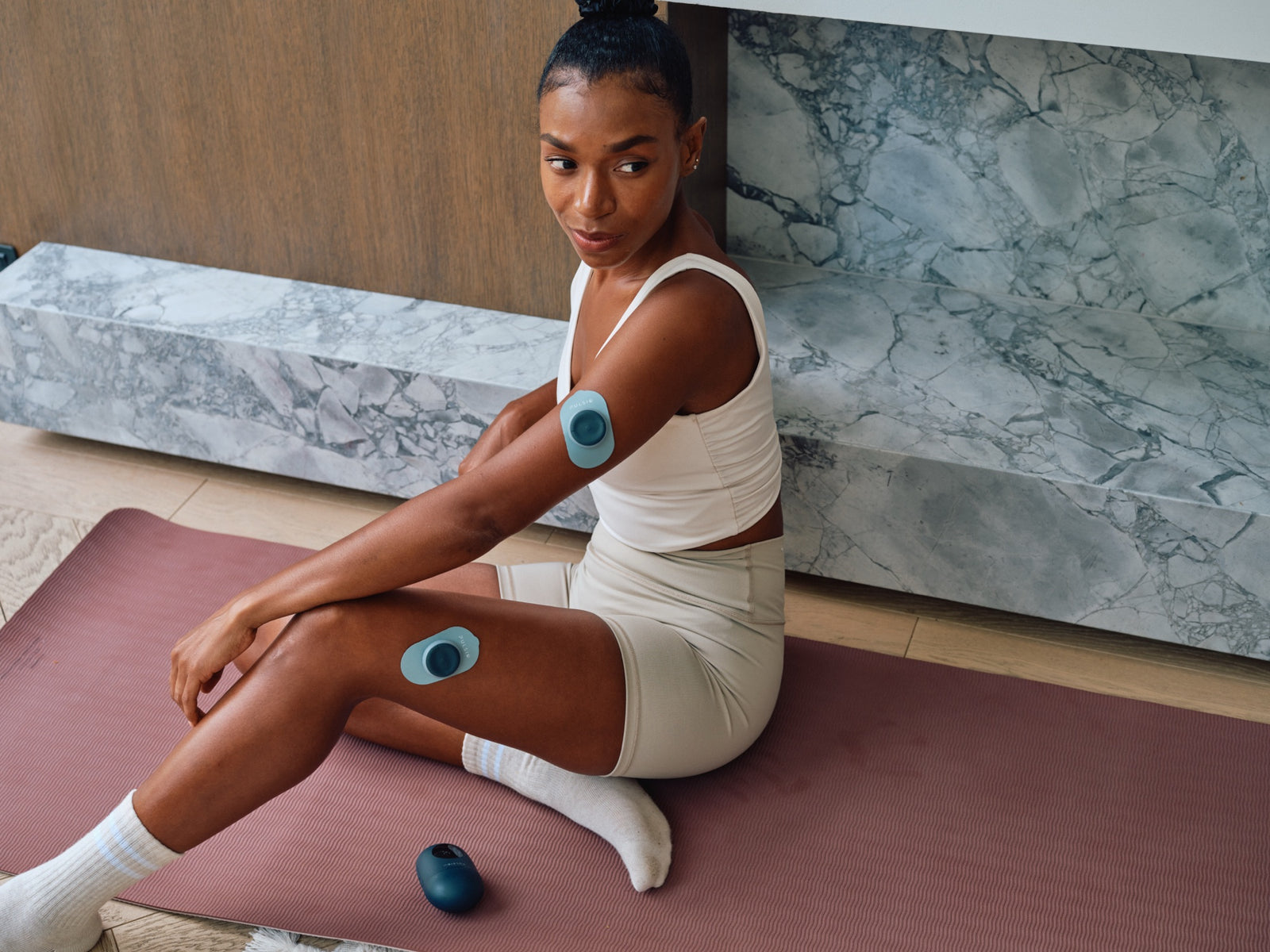
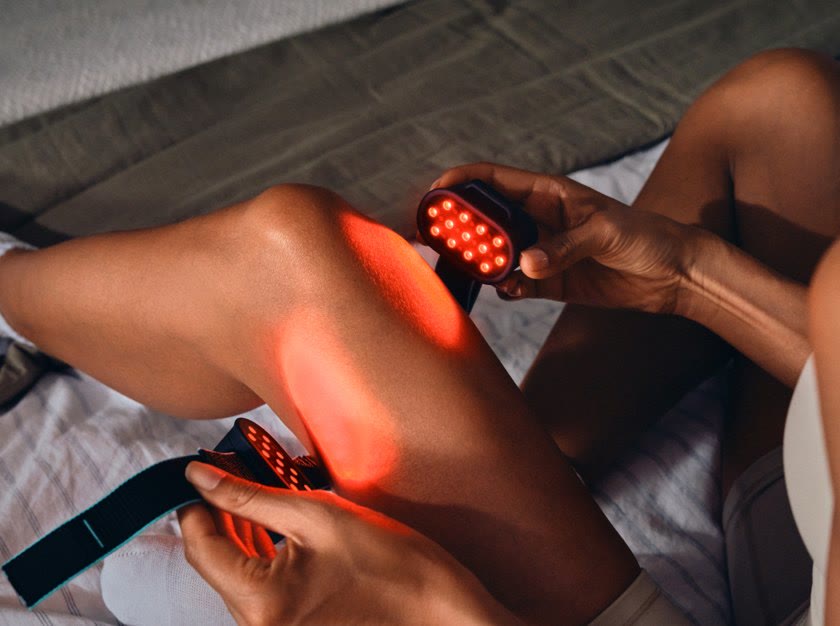
Wear it on a stiff knee, shoulder or elbow and let targeted light work beneath the surface while you get on with your day.
10–40minute sessions
Slip it on after a session or a long run and make it part of your cool-down.
3pods that wrap the area
Cover a calf, quad or forearm with light while you rest, so you feel ready for the next one.
ATPthe fuel your cells run on
Red and near-infrared light are absorbed by your mitochondria, the parts of your cells that make energy.
660nm visible red light
Red light is a favourite in skincare too, loved for leaving skin looking healthy and refreshed.
Meet Infra Pod
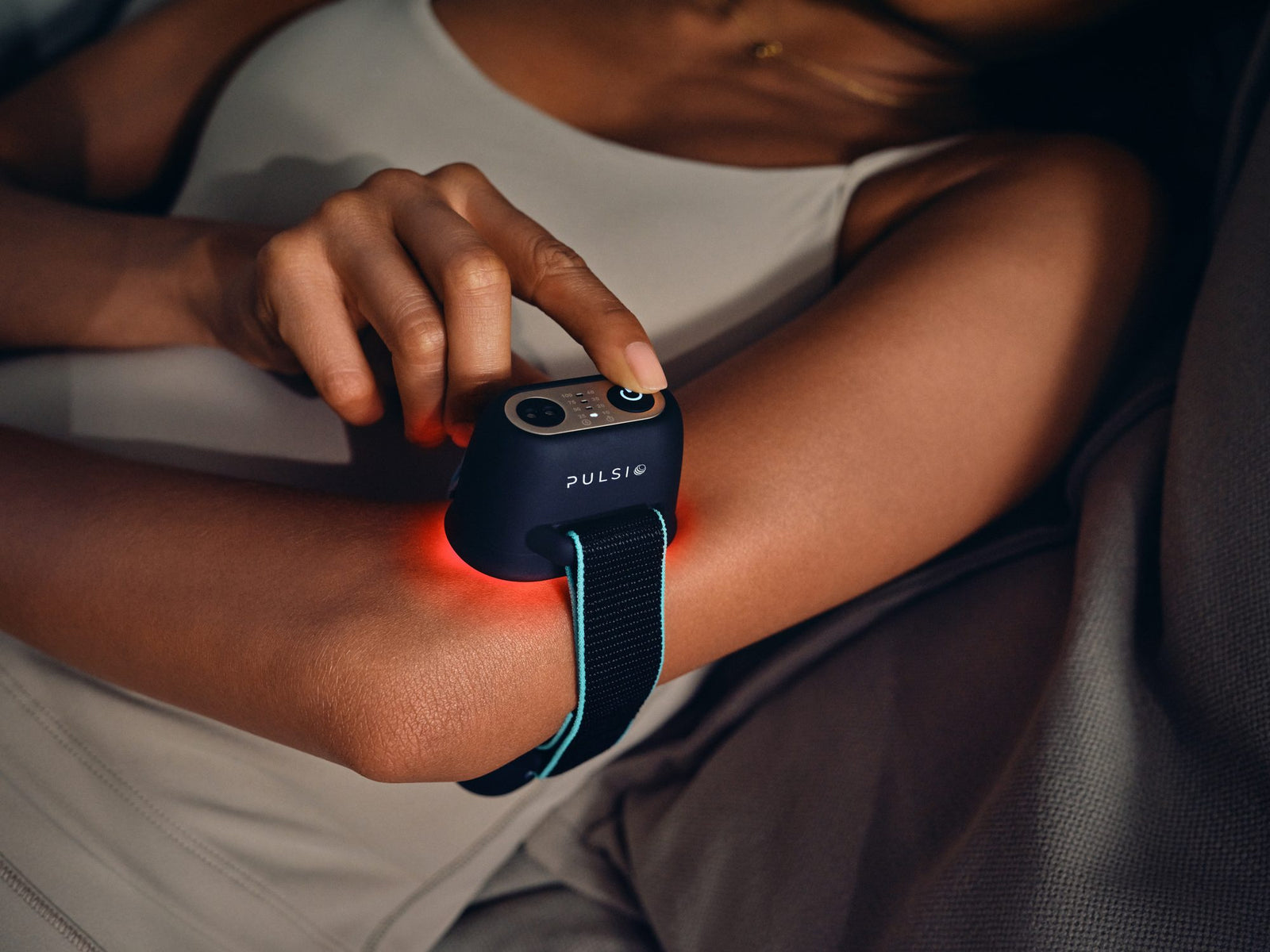
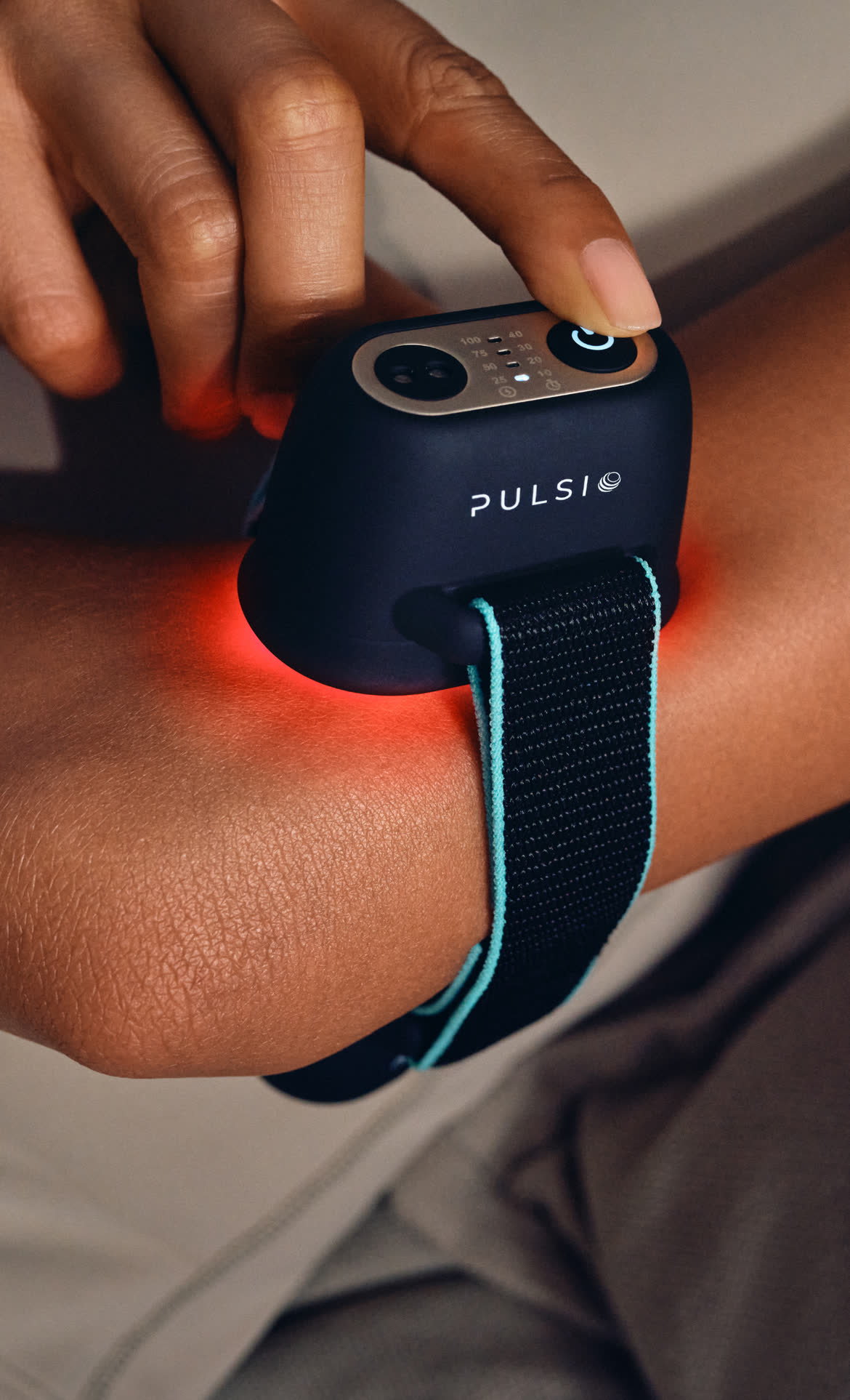
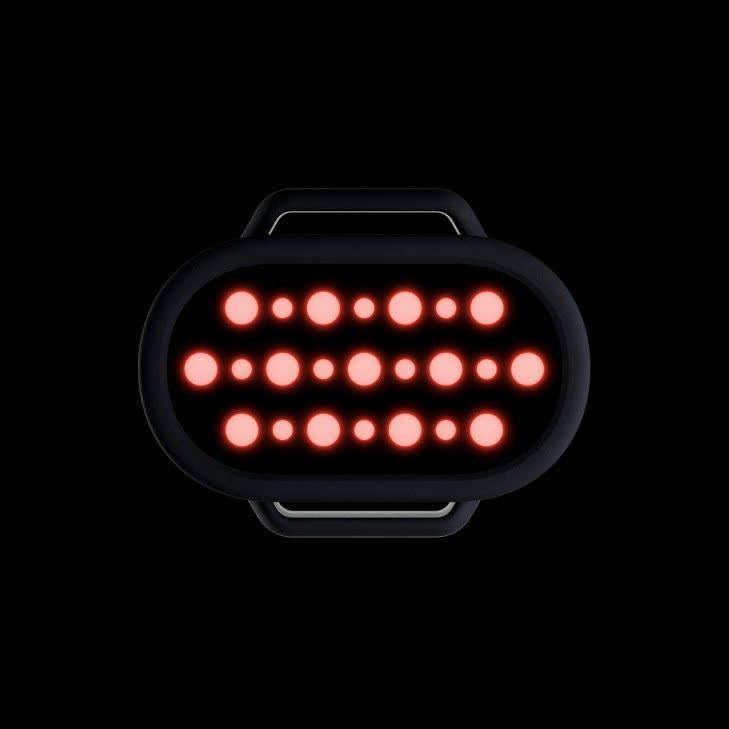
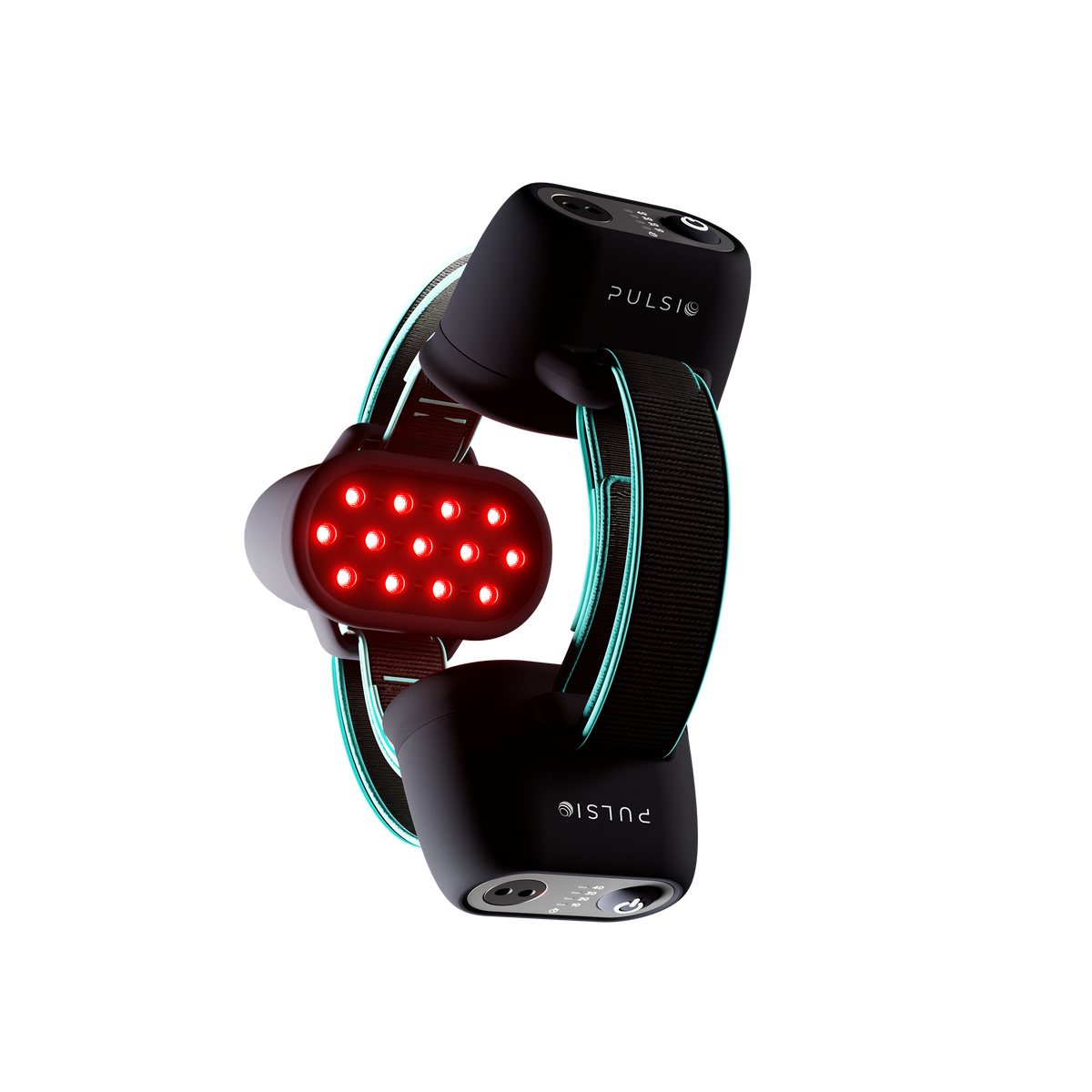
Infra Pod combines 808nm near-infrared laser technology with 660nm red light in a flexible three-pod design.

Focused near-infrared light designed for targeted delivery beneath each pod.

Visible red light complements the deeper-reaching near-infrared wavelength.

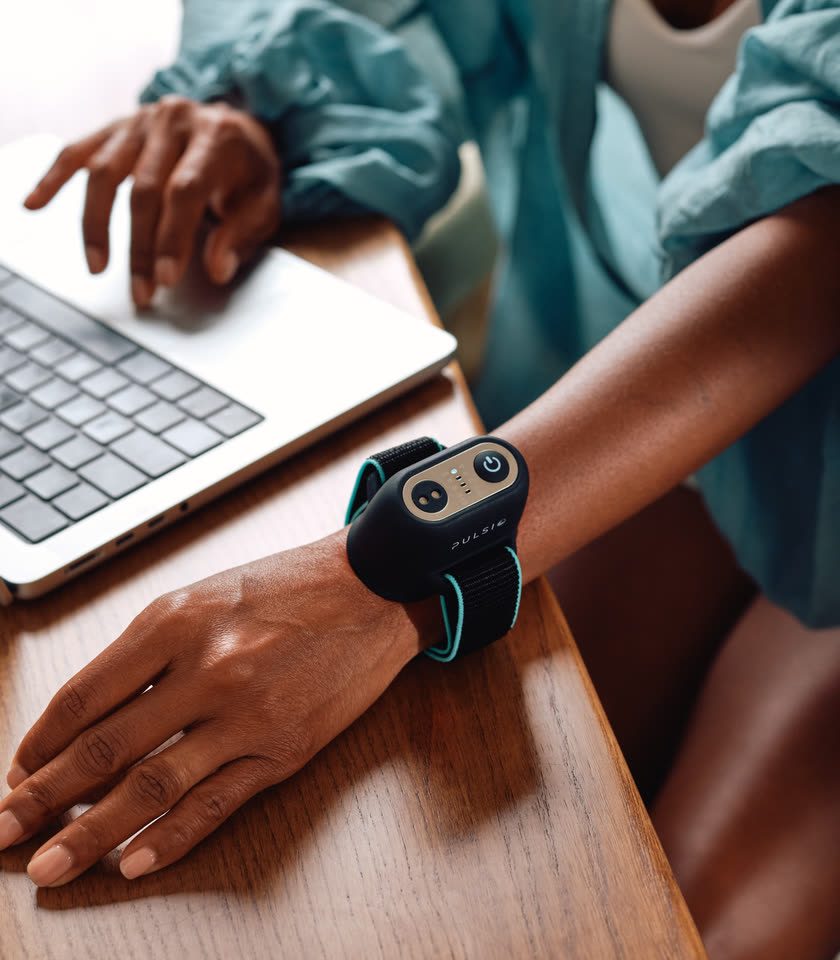
Three connected modules contour around different areas of the body for targeted coverage.

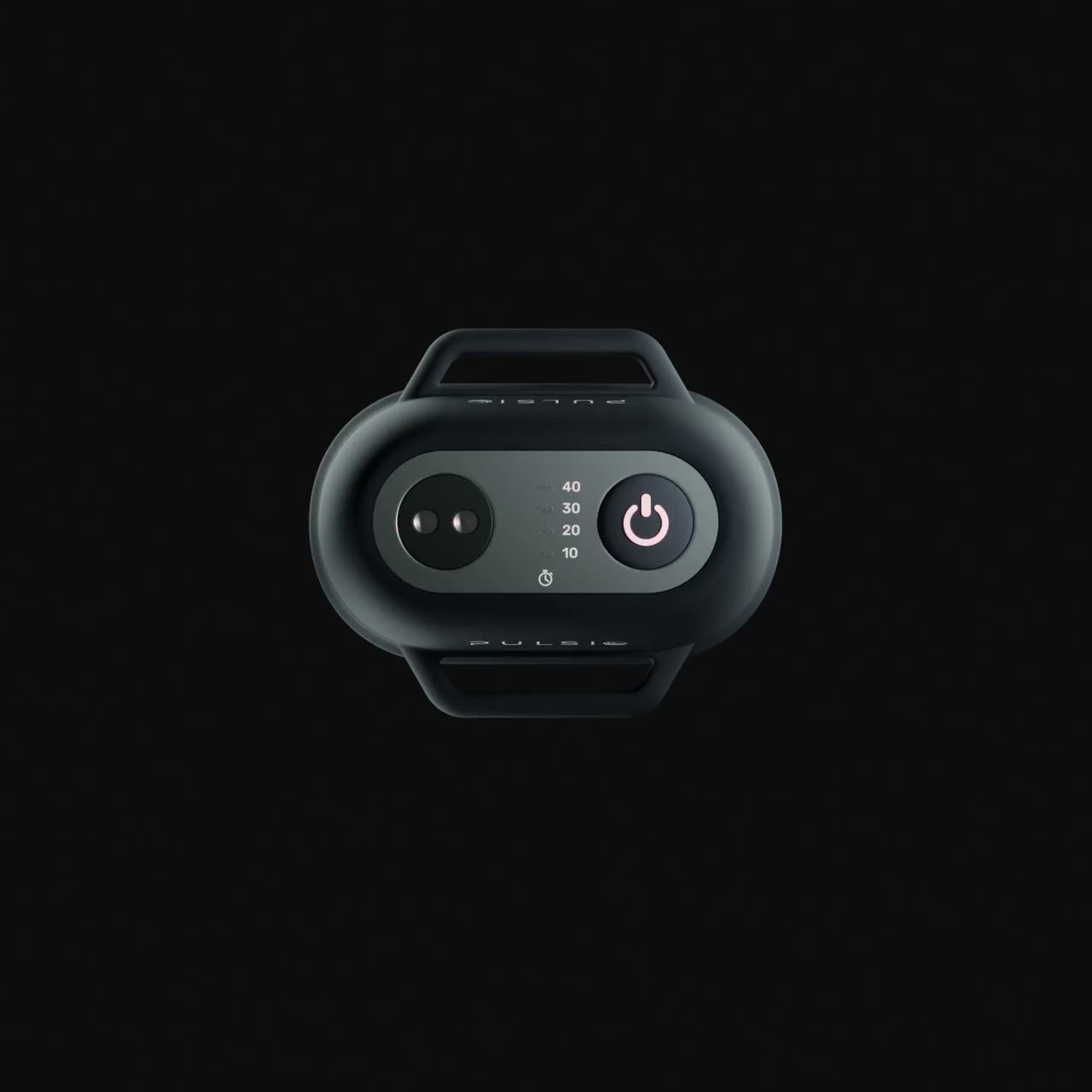
One optimised light setting. Simply choose your session time and start.
How it compares
Red-light panels provide broad light exposure. Infra Pod takes a different approach: three wearable modules positioned directly over the area you’re targeting, combining 660nm red light with a focused 808nm near-infrared laser.
| Feature | Infra Pod | Traditional red-light panel |
|---|---|---|
| 660nm red light | Yes | Varies |
| 808nm near-infrared | Yes | Varies |
| Focused 808nm laser | Yes | Typically no |
| Up to 60% more light at depth* | Yes | No |
| Direct-to-body positioning | Yes | No |
| Flexible around joints | Yes | No |
| Wearable | Yes | No |
| Portable | Yes | Limited |
*Based on Pulsio optical modelling comparing focused 808nm laser and 660nm red light under the same conditions. Up to 60% more light was measured at 10mm depth.

Infra Pod
Infra Pod brings 660nm red light and a focused 808nm near-infrared laser directly to the areas you want to target.
£249.99
808nm Near-Infrared Laser. 660nm Red Light. One targeted recovery system.
Shop Infra Pod*Based on Pulsio optical modelling comparing 808nm laser and 660nm red light under the same conditions. Up to 60% more light was measured at a depth of 10mm.
What the evidence says
Below are summaries of studies and reviews examining red and near-infrared photobiomodulation across areas relevant to physical recovery and movement.
Knee osteoarthritis
Across 22 placebo-controlled trials, light therapy reduced knee pain and disability compared with a placebo device.
Stausholm et al. BMJ Open, 2019Acute and chronic
Light therapy eased pain straight after treatment for acute neck pain, and for up to 22 weeks after treatment ended for chronic neck pain.
Chow et al. The Lancet, 2009Before exercise
Light used before exercise improved performance and lowered blood markers of muscle damage afterwards.
Leal-Junior et al. Lasers in Medical Science, 2015Musculoskeletal conditions
Across a range of muscle and joint conditions, light therapy reduced pain compared with placebo, in the short and medium term.
Clijsen et al. Eur J Phys Rehabil Med, 2017The studies use different wavelengths, doses, devices and treatment protocols. They did not test Infra Pod itself, but help explain the wider scientific research behind light-based recovery.
The studies
Plain-English summaries of the key studies, with links to the original research.
Pooled 22 trials and found light therapy reduced pain and disability in knee osteoarthritis, when the right dose was used.
16 trials and 820 patients. Pain eased straight after treatment for acute neck pain, and for months afterwards for chronic neck pain.
Light used before exercise improved performance and reduced markers of muscle damage across 13 good-quality trials.
18 studies and 1,462 people. Light therapy reduced pain across a range of muscle and joint problems.
A clear review of how red and near-infrared light help calm inflammation, starting inside the mitochondria.
Why more is not always better: too little light does little, and too much can cancel out the benefit. The dose matters.
FAQ
Need help choosing? Our UK team is happy to talk it through.
Get in touchInfra Pod is not intended to diagnose, treat, cure or prevent any disease.
To ensure the best fit of your Pulsio Compression Boots, measure the inseam of your leg from your heel to
the uppermost part of your inner thigh.
If you are in between sizes, we recommend sizing down to ensure the best fit.
| Size | Upper Thigh | Leg Inseam | Height |
|---|---|---|---|
| Small |
Up to 27” Up to 69cm |
25” - 29” 64cm - 74cm |
5’0” - 5’5” 152cm - 168cm |
| Regular |
Up to 29” Up to 74cm |
29” - 34” 74cm - 86cm |
5’5” - 6’0” 176cm - 182cm |
| Large |
Up to 32.5” Up to 83cm |
34” - 36” 86cm - 91cm |
6’0” - 6’6” 182cm - 198cm |
To ensure the best fit of your Pulsio Compression Boots, measure the inseam of your leg from your heel to
the uppermost part of your inner thigh.
If you are in between sizes, we recommend sizing down to ensure the best fit.
| Size | Upper Thigh | Leg Inseam | Height |
|---|---|---|---|
| Small |
Up to 27” Up to 69cm |
25” - 29” 64cm - 74cm |
5’0” - 5’5” 152cm - 168cm |
| Regular |
Up to 29” Up to 74cm |
29” - 34” 74cm - 86cm |
5’5” - 6’0” 176cm - 182cm |
| Large |
Up to 32.5” Up to 83cm |
34” - 36” 86cm - 91cm |
6’0” - 6’6” 182cm - 198cm |