



The science of TENS

How gentle pulses help ease everyday aches

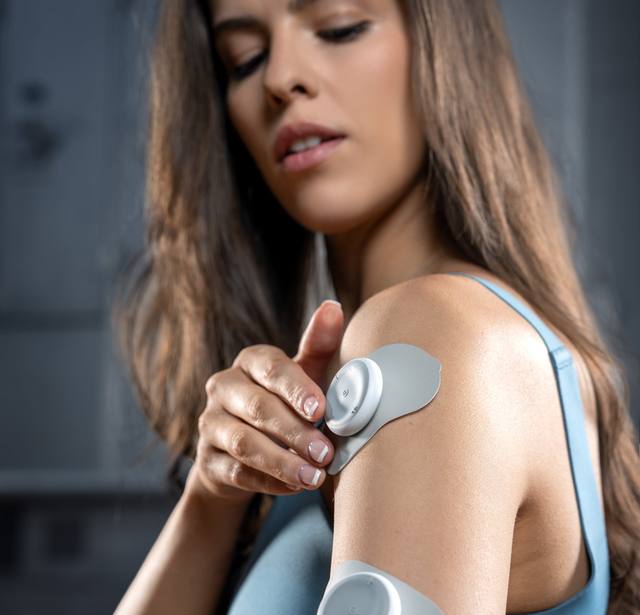
TENS has been easing aches and pains for more than 50 years, and it has been tested in hundreds of clinical trials. Here’s what the research tells us, and how we’ve built it into TENS Pod: two wireless units you can place almost anywhere on the body, 16 strength levels and 5 TENS and EMS modes, in a charging pod that fits in your pocket.

  • Free UK delivery
  • 30-day home trial

How TENS Pod is designed

Tiny pulses, set the way you like them

Every TENS session is made of tiny electrical pulses, far too quick to notice one by one. You feel them together as a tingle.

Three things shape that tingle: how strong each pulse is, how fast they come, and the rhythm they follow. TENS Pod puts all three in your hands, with 16 strength levels and 5 built-in modes.

What the research saysStrength matters most. In a study of 130 people, a strong but comfortable setting gave the biggest effect, while pulses set too low to feel did little. Another found that turning it up as the tingle faded gave more relief again.
Moran et al. Journal of Pain, 2011. Pantaleão et al. Journal of Pain, 2011.

StrengthHow strong each pulse feels

Pace How often they come

  • Strength

    16 levels, from barely there to strong.

    A strong, comfortable tingle gives the most relief, and turning it up as the tingle fades helps even more. 16 levels give you room for both.

  • Pace

    Fast pulses feel like a smooth buzz, slow ones like a gentle tap.

    Each is linked to a different way your body eases pain: the pain gate, or endorphins. Try a few modes to find the feel you like.

  • Rhythm

    Steady, in bursts, or rising and falling.

    Changing patterns help stop the tingle fading into the background, so it keeps feeling fresh.

You don’t need to remember any of this. TENS Pod’s 5 modes set the pace and rhythm for you. Pick one, then set the strength.

The evidence

Decades of research. Thousands of studies.

TENS grew out of a simple idea published in 1965: that a gentle, harmless sensation can turn down the volume on pain. Clinical studies of TENS followed within a few years.

Today it’s one of the most researched drug-free approaches to everyday aches and pains, with thousands of papers looking at how it works, where to use it and how strong it should feel.

Papers published per year
Papers on TENS published each year on PubMed, rising from 20 in 1980 to 1,029 in 2025.2505007501,0001980: 20 papers19801981: 26 papers1982: 25 papers1983: 57 papers1984: 107 papers1985: 154 papers19851986: 137 papers1987: 129 papers1988: 122 papers1989: 156 papers1990: 194 papers19901991: 173 papers1992: 155 papers1993: 156 papers1994: 143 papers1995: 145 papers19951996: 157 papers1997: 131 papers1998: 146 papers1999: 140 papers2000: 140 papers20002001: 153 papers2002: 184 papers2003: 208 papers2004: 202 papers2005: 240 papers20052006: 256 papers2007: 316 papers2008: 352 papers2009: 388 papers2010: 406 papers20102011: 416 papers2012: 413 papers2013: 448 papers2014: 504 papers2015: 582 papers20152016: 515 papers2017: 615 papers2018: 607 papers2019: 655 papers2020: 752 papers20202021: 691 papers2022: 693 papers2023: 754 papers2024: 845 papers2025: 1,029 papers20251,029 papers in 2025
  • 14,000+published papers on TENS, listed on PubMed
  • 1965the year the “pain gate” theory behind TENS was published
  • 381randomised trials in one 2022 review of TENS for pain
  • 24,532people taking part across those trials

Source: PubMed search for transcutaneous electrical nerve stimulation, October 2026. Johnson et al. BMJ Open, 2022. Melzack and Wall, Science, 1965.

The basics

A simple guide to TENS and EMS

Choose one to explore

TENS Pod uses two kinds of gentle electrical stimulation through the same pads. What changes is how strong the pulses are and what they reach: TENS talks to the nerves that carry feeling, while EMS goes a step further and gets muscles moving.

As pulses get stronger you first feel a tingle (TENS), then muscles start to tighten (EMS). BELOW FEELING TENS: A TINGLE EMS: MUSCLES TIGHTEN First tingleMuscles start to tighten GentleStronger

TENS. Set to a strong, comfortable tingle, just below the point where muscles start to twitch. It works on the nerves that carry feeling, to help ease aches and tension.

EMS. Turned up past the tingle until muscles gently tighten and relax. It works on the nerves that move your muscles, to help wake up tired muscles.

Everyone’s body is different, so where these points sit on TENS Pod’s 16 levels varies from person to person. Always build up slowly.

Cross-section of skin, fat and muscle with a TENS Pod unit on top. Gentle TENS pulses reach the sensory nerves just under the skin; stronger EMS pulses reach the motor nerves that make muscle contract.

The science

What is TENS?

Choose a setting to see what it does

TENS stands for transcutaneous electrical nerve stimulation. Put simply: gentle pulses through the skin.

A gel pad sends tiny pulses to the nerves underneath, and you feel a tingle. It won’t fix what caused an ache, but it can change how strongly you feel it.

  • Fast pulses are linked to the “pain gate” in your spinal cord.
  • Slow pulses are linked to endorphins, your body’s own pain relief.
  • EMS reaches the nerves that make muscles tighten and relax.

Why modes and strength matter

No two aches, or people, are quite the same. So TENS Pod gives you 5 TENS and EMS modes, each with its own feel, and 16 strength levels to build up to a strong, comfortable tingle: the setting research suggests works best.

  • 5modes to switch between
  • 16strength levels to fine-tune

What it feels like, and what it does

  • BuzzFast TENS: lots of pulses a second, felt as a smooth, steady tingle
  • TapSlow TENS: a few pulses a second, felt as gentle tapping
  • SqueezeEMS: muscles tighten and let go in a rhythm
Nerves
Fast pulses keep the nerves that carry touch busy with harmless signals.
Muscles
Stay relaxed. Fast TENS works on feeling, not movement.
Body
Linked to the “pain gate” in the spinal cord, so ache signals get through less while it’s running.
Nerves
A few stronger pulses each second, felt as a slow, steady tap.
Muscles
At higher strengths you may feel small, gentle twitches under the pads.
Body
Linked to the release of endorphins, the body’s own pain relief.
Nerves
Reaches the nerves that tell your muscles to move.
Muscles
Tighten and let go in a steady rhythm, so you can feel them working.
Body
Each squeeze and release helps get blood moving through tired muscles.

What each setting is linked to in research; everyone responds a little differently. Sluka and Walsh, Journal of Pain, 2003. Han, Trends in Neurosciences, 2003. Maffiuletti, European Journal of Applied Physiology, 2010.

Why TENS Pod

The benefits of TENS Pod

Two wireless units and no trailing wires, so TENS Pod goes almost anywhere it aches. Here’s what people reach for it for.

  • PAIN RELIEF

    Drug-free relief, wherever it aches

    16strength levels to tune your relief

    Gentle TENS pulses help take the edge off aches and tension, wherever they are. No tablets, no trailing wires, just two units you stick on and switch on.

  • ON THE GO

    Relief that fits in your pocket

    4.5hours of use per charge

    The charging pod slips into a bag or a desk drawer, so it’s there at work, at home or away.

  • WARM UP

    Wake muscles up before you move

    5TENS and EMS modes

    Use an EMS mode before a walk, a round of golf or a day in the garden, and feel muscles gently tighten and relax as they get going.

  • RECOVERY

    Recovery for tired muscles

    15minute sessions that switch themselves off

    After a long day on your feet or a busy weekend, let gentle EMS work tired muscles while you put your feet up.

Meet TENS Pod

Two wireless units. One pocket-sized pod.

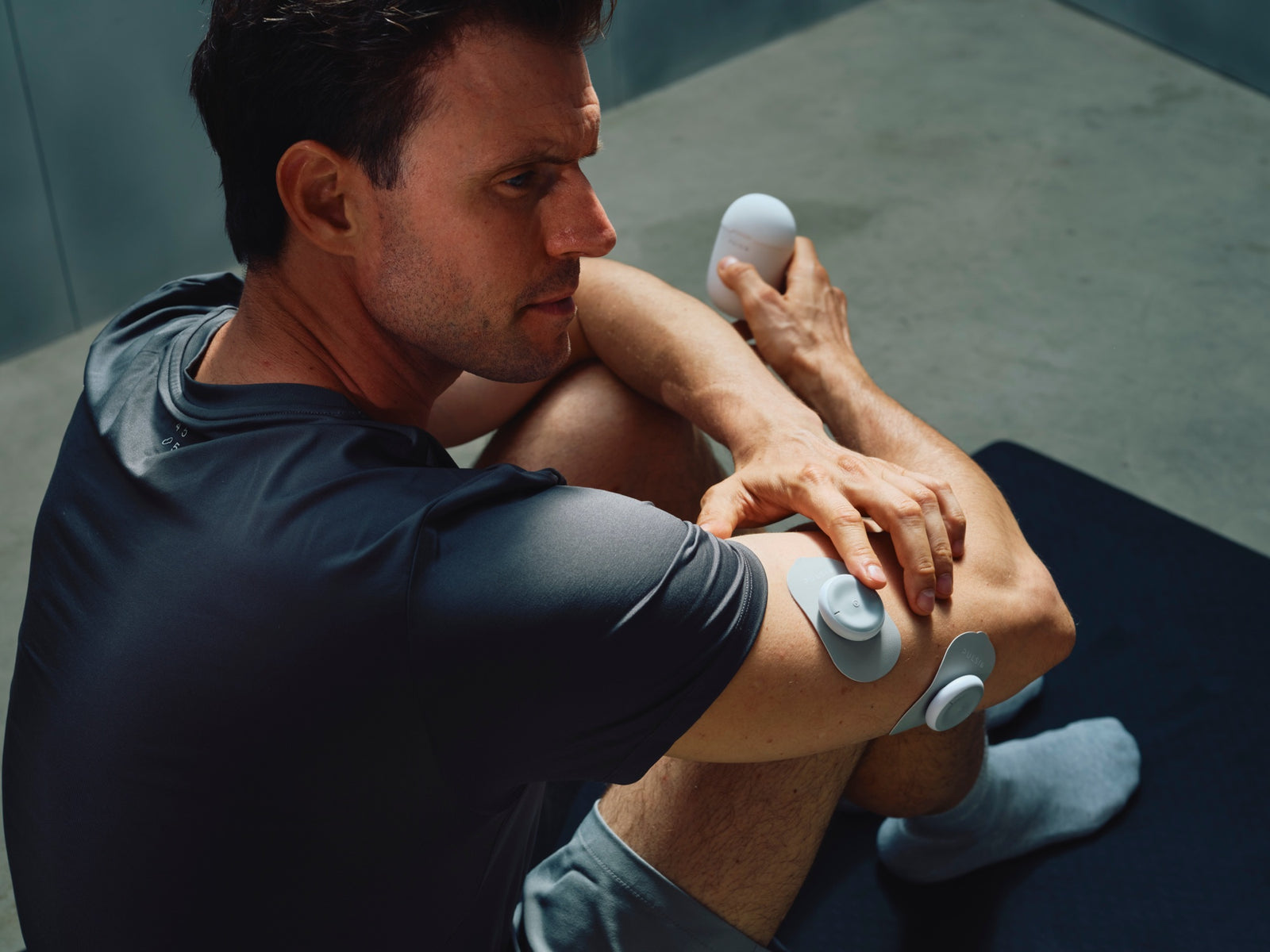
TENS Pod brings TENS and EMS together in two wireless units that stick on right where you need them.

Shop TENS Pod
  • Two Wireless Units

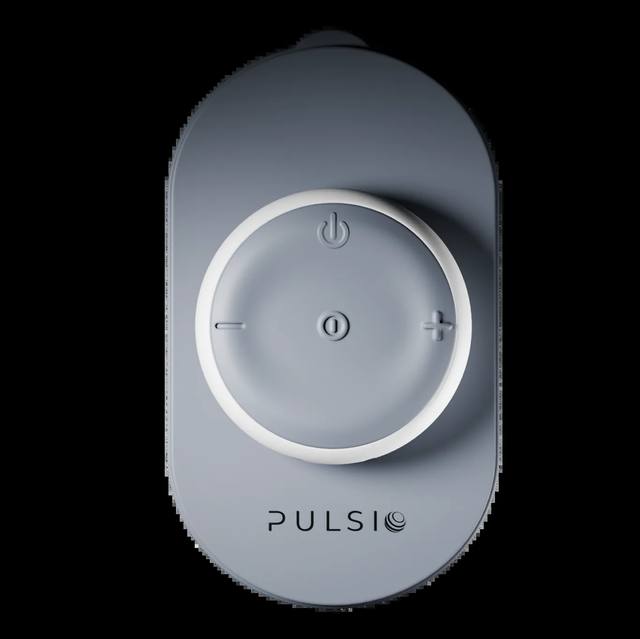
    Each unit clips onto its own gel pad, so there are no wires and you can place them almost anywhere on the body.

  • 16 Strength Levels

    Press plus or minus on the unit to go from a gentle tingle to a strong, comfortable buzz.

  • 5 TENS and EMS Modes

    Built-in modes for easing aches and tension, or gently working tired muscles.

  • Pocket-Sized Charging Pod

    Both units charge in the pod over USB-C, with up to 4.5 hours of use per charge.

Why TENS Pod

TENS Pod vs traditional TENS machines

Feature
Pulsio TENS Pod
Traditional TENS machine
TENS for aches and tension
Yes
Yes
EMS modes for tired muscles
Yes
Varies
Wireless, no trailing wires
Yes
No
Controls on the unit itself
Yes
No
16 strength levels
Yes
Varies
Rechargeable over USB-C
Yes
Often batteries
Pocket-sized charging pod
Yes
No
Discreet under clothes
Yes
Limited
Automatic shut-off
Yes
Varies

TENS Pod

Gentle relief, wherever you need it.

TENS Pod puts TENS and EMS in two wireless units that stick on where it aches, with a charging pod that fits in your pocket.

£99.99 or 3 interest-free payments with Klarna

  • Two wireless unitsStick on where it aches, with no trailing wires.
  • TENS and EMS5 built-in modes, for easing aches or working tired muscles.
  • 16 strength levelsFrom a gentle tingle to a strong, comfortable buzz.
  • Pocket-sized podCharges both units over USB-C, with up to 4.5 hours of use per charge.

Two wireless units. TENS and EMS. Relief that fits in your pocket.

Shop TENS Pod
  • Free UK delivery
  • 30-day home trial

What the evidence says

What the research says

Below are summaries of reviews and trials looking at TENS for the kinds of aches people use it for every day.

GROWING EVIDENCEPainSafety

Everyday aches and pains

Adults with short and long-term pain

381randomised trials24,532 people

Across the trials that compared TENS with a placebo device, pain was lower during or straight after TENS, with no serious side effects reported.

Johnson et al. BMJ Open, 2022
PROMISINGPain on movingFatigue

Aches when you move

Women with fibromyalgia, at home

301people4 weeks of daily use

Using TENS during everyday activity eased pain on moving and reduced fatigue, compared with a placebo device or no TENS.

Dailey et al. Arthritis & Rheumatology, 2020
HOW TO USE ITStrengthDose

Strength makes the difference

Healthy adults, five different settings

130people30-minute sessions

The stronger the comfortable setting, the bigger the effect. Pulses set too low to feel did no better than a placebo.

Moran et al. Journal of Pain, 2011

The studies use different devices, settings and session lengths. They did not test TENS Pod itself, but help explain the research behind TENS. Results vary between studies: a 2019 Cochrane overview found the evidence for long-term pain was too low in quality to draw firm conclusions, which is why larger, newer trials like these matter.

The studies

Research library

Plain-English summaries of the key studies, with links to the original research.

  • HOW IT WORKSSCIENCE

    PMID 5320816 19 Nov 1965

    Pain mechanisms: a new theory

    The paper behind the “pain gate”: the idea that harmless sensations, like touch or a tingle, can turn down pain signals in the spinal cord.

  • PAINBMJ OPEN

    PMID 35144946 10 Feb 2022

    Efficacy and safety of TENS for acute and chronic pain in adults (the meta-TENS study)

    381 trials and 24,532 people. Pain was lower during or straight after TENS than with a placebo device, without serious side effects.

  • MOVEMENTARTHRITIS RHEUMATOL

    PMID 31738014 May 2020

    TENS reduces movement-evoked pain and fatigue: a randomised, controlled trial

    301 women with fibromyalgia used TENS during daily activity for four weeks. Pain on moving and fatigue both eased compared with a placebo device.

  • BACKSURG TECHNOL INT

    PMID 27042787 Apr 2016

    A meta-analysis of TENS for chronic low back pain

    13 studies and 267 people. TENS significantly reduced long-term lower back pain, especially in courses of under five weeks.

  • HOW TO USE ITJ PAIN

    PMID 21481649 Aug 2011

    Hypoalgesia in response to TENS depends on stimulation intensity

    130 people, five settings. A strong but comfortable setting worked best, so the advice is to turn it up until it feels strong but never painful.

  • HOW IT WORKSJ PAIN

    PMID 14622708 Apr 2003

    TENS: basic science mechanisms and clinical effectiveness

    Explains how fast and slow TENS work differently, from the pain gate to the body’s own pain relief, and why well-run trials matter.

  • HOW IT WORKSTRENDS NEUROSCI

    PMID 12495858 Jan 2003

    Neuropeptide release produced by electrical stimulation of different frequencies

    Slow and fast pulses prompt the body to release different natural pain-easing chemicals, including endorphins.

  • MUSCLESEUR J APPL PHYSIOL

    PMID 20473619 Sep 2010

    Physiological and methodological considerations for the use of neuromuscular electrical stimulation

    How EMS makes muscles contract, how that differs from a normal contraction, and which settings shape what you feel.

  • PAINMEDICINA

    PMID 36295493 22 Sep 2022

    Using TENS for pain control: update on the state of the evidence

    A look back over 50 years of TENS research. TENS may help a range of short and long-term pain, and getting the strength right is critical.

FAQ

Your questions, answered

Need help choosing? Our UK team is happy to talk it through.

Get in touch
Can I try it at home first?
Yes. Try TENS Pod at home for 30 days, and if it’s not right for you, send it back for a full refund.
How long is a session?
Each session runs for 15 minutes, then TENS Pod switches itself off. Give the area a rest between sessions.
Where on the body can I use it?
Almost anywhere it aches: your shoulders, upper and lower back, arms and legs, including forearms, thighs, knees and calves. Place the pads on clean, dry skin with the whole gel surface in contact. Keep them off your head, the front of your neck, your chest near your heart, and any broken or irritated skin.
What’s the difference between TENS and EMS?
TENS uses gentle pulses that you feel as a tingle, aimed at the nerves that carry feeling, to help ease aches and tension. EMS uses stronger pulses that reach the nerves that move your muscles, so you feel them tighten and relax. TENS Pod has both.
How strong should it feel?
Start low and build up one level at a time until you feel a strong, comfortable tingle. It should never feel painful or sharp. Research suggests a strong but comfortable setting works best, so there’s no need to go to the top level.
Is it safe?
TENS is drug-free and non-invasive. Don’t use it while driving or asleep, on broken or irritated skin, on your head, or on your chest near your heart. If you have a pacemaker or another implanted device, are pregnant, or have epilepsy or a heart condition, speak to your GP before using it.
Is there research behind TENS?
Yes. TENS has been studied for more than 50 years, in hundreds of clinical trials. The studies on this page use a range of devices, settings and session lengths. They did not test TENS Pod itself, but they form part of the wider research behind TENS.
What’s in the box?
  • Two wireless TENS control units
  • Charging pod
  • Two adhesive gel pads
  • USB-C charging cable
  • User manual
What are the key specifications?
  • TENS and EMS
  • 5 modes
  • 16 strength levels
  • 15-minute sessions with automatic shut-off
  • Up to 4.5 hours of use per charge
  • USB-C charging pod
  • White or black

TENS Pod is not intended to diagnose, treat, cure or prevent any disease. If you have ongoing or unexplained pain, speak to your GP.